

图片名称

Drone Detection, Countermeasure, And Anti-interference Solution

全部
  • 全部
  • 产品管理
  • 新闻资讯
  • 企业视频
  • 企业图册
Single frequency four channel nano anti-interference module
文件1780640046668.png
文件1780640046671.png

Single frequency four channel nano anti-interference module

JAJ1-4 NANOMiniature Four-Element ArrayIntegrated Navigation Anti-Jamming UnitProduct Specification2026.04Table of Contents1 Overview2 Product Composition3 Product Specification3.1 Main Functions3.2 Main Technical Indicators3.3 External Interfaces3.4 Structural Design3.5 Reliability3.6 Environmental Adaptability3.7 Shock and Vibration4 Packaging5 Installation Precautions1. OverviewThis document specifies the product specification requirements for the JAJ1-4 Nano Integrated Navigation Anti-Jamming Unit (hereinafter referred to as the "AJU").The Anti-Jamming Unit is mainly composed of an array antenna, an anti-jamming processing module, a built-in receiver, andsupporting cables. It supports the reception, amplification, down-conversion, filtering, anti-jamming processing, and up-conversion output of 4-channel signals at BDS B1, GPS L1, and Galileo E1 frequency points.The built-in receiver supports PVT (Position, Velocity, Time) solution output. It has a power supply range of DC9V~36V and is capable of resisting 1 to 3 incoming interferences of various types such as broadband, narrowband, pulse, and frequency sweep suppression.2. Product CompositionThe product consists of an anti-jamming unit has test cables, and random documents.The composition details are as follows:Table 2-1 Product Configuration (Single Set of Product)Serial NumberProduct Configuration itemnumberNote1Anti-Jamming Unit1 pcs50mm×50mm2Connect Cable/Optional, not configured by default, customizable3Built-in navigation receiver1 pcsuBlox NEO-M9N4G1 frequencies/Optional, not supported by default, if chosen supported G1,the power consumption will Increase.5Screws1 set1 set contains 4 pcs M2.5×2.4 screwsProduct Drawings of Anti-Jamming UnitFigure 2-1 Product Drawings of Anti-Jamming UnitFigure 2-2 Dimensions Drawing of Anti-Jamming Unit3. Product Specification3.1 Main Functions1). Supports reception of BDS B1, GPS L1, and Galileo E1 frequency signals.2). Possesses the capability to resist various suppression interferences such as wideband, narrowband, sweep, and pulse, as well as combinations ofthe above interferences within the BDS B1, GPS L1, and Galileo E1 frequency bands.3). Supports soft bypass and anti-interference mode output, which users can flexibly select and switch via the serial port.4). Built-in receiver, capable of outputting positioning solution results after anti-interference processing.3.2 Main Technical Indicators1) Frequency Point Anti-jamming Capability(1)Number of Channels: 4 channels, supporting BDS B1, GPS L1, and Galileo E1 frequency bands;(2)Anti-jamming Types: Capable of resisting various suppression interferences such as broadband, frequency-sweeping, and pulse in B1/L1/E1 frequency bands, as well as the combination of the above interferences;(3)Number of Anti-multiple Interferences: 1 to 3 interference sources in different directions;(4)Anti-single Broadband Interference Capability: Interference-to-signal ratio ≥ 95dB@-130dBm;(5)Anti-three Broadband Interferences Capability: Interference-to-signal ratio ≥ 80dB@-130dBm;(6)Anti-jamming Spatial Range: Azimuth 0°~360°, Elevation -10°~90° .Note: The elevation angle is defined as the angle between the spatial vector of the anti-jamming unit and the horizontal plane, with the body coordinate system y-axis as the pitch axis, the counterclockwise direction is "+", and the clockwisedirection is "-".2) RF Output(1)RF Output Power: -55dBm~-70dBm;(2)RF Impedance: 50 ohms;(3)Output VSWR: ≤2.0.3) Built-in Receiver SpecificationsThe built-in receiver supports receiving and resolving signals at BDS B1, GPS L1, and Galileo E1 frequency points, and outputs positioning results through a data interface:(1)Positioning Accuracy: Horizontal error ≤7m, vertical error ≤9m (95%, PDOP≤4);(2)Velocity Measurement Accuracy: ≤0.2m/s (95%).4) Antenna Port Burnout Resistance: ≥10W.5) Operating Voltage Range: DC9V~36V.6) Average Power Consumption: ≤6W.3.3 External Interfaces1) 1 pcs J30J power data interface, which is used for power supply and data commissioning. The power data interface is a J30J-9ZK connector, with a total of 9PIN signal definitions as follows.Table 3-1 Power Data Interface Definition TableConnector PinNumberSignal DefinitionSignal DescriptionInstructions1+9V~+36VPower InputUnit Power Supply2+9V~+36VPower Input3GNDPower Ground4GNDPower Ground5RS422 RX-RS422 ReceiveData Transmission6RS422 RX+RS422 Receive7RS422 TX-RS422 Transmit8RS422 TX+RS422 Transmit9GNDPower Ground2) 1 pcs SMA-K RF output interface, which is used for outputting BDS B1, GPS L1, and Galileo E1 frequency signals after antenna amplification and anti-interference processing. The definition of the RF signal output interface is shown in thefollowing table:Table 3-2 Definition Table of RF Signal Output InterfaceConnectorModelSignal Output AmplitudeSignal DescriptionInstructionsSMA-K-55dBm~-70dBmRadio FrequencyUpconversion OutputOutput B1/L1/E1 frequency signal3.4 Structural Design1) Dimensions: Length × Width × Height:

Key Words:

  • Product Detail
  • parameter
  • JAJ1-4 NANO

    Miniature Four-Element Array

    Integrated Navigation Anti-Jamming Unit

    Product Specification

    2026.04

    Table of Contents

    1 Overview

    2 Product Composition

    3 Product Specification

    3.1 Main Functions

    3.2 Main Technical Indicators

    3.3 External Interfaces

    3.4 Structural Design

    3.5 Reliability

    3.6 Environmental Adaptability

    3.7 Shock and Vibration

    4 Packaging

    5 Installation Precautions

    1. Overview

    This document specifies the product specification requirements for the JAJ1-4 Nano Integrated Navigation Anti-Jamming Unit (hereinafter referred to as the "AJU").

    The Anti-Jamming Unit is mainly composed of an array antenna, an anti-jamming processing module, a built-in receiver, and

    supporting cables. It supports the reception, amplification, down-conversion, filtering, anti-jamming processing, and up-conversion output of 4-channel signals at BDS B1, GPS L1, and Galileo E1 frequency points.

    The built-in receiver supports PVT (Position, Velocity, Time) solution output. It has a power supply range of DC9V~36V and is capable of resisting 1 to 3 incoming interferences of various types such as broadband, narrowband, pulse, and frequency sweep suppression.

    2. Product Composition

    The product consists of an anti-jamming unit has test cables, and random documents.

    The composition details are as follows:

    Table 2-1 Product Configuration (Single Set of Product)

    Serial NumberProduct Configuration itemnumberNote
    1Anti-Jamming Unit1 pcs50mm×50mm
    2Connect Cable/Optional, not configured by default, customizable
    3Built-in navigation receiver1 pcsuBlox NEO-M9N
    4G1 frequencies/Optional, not supported by default, if chosen supported G1,the power consumption will Increase.
    5Screws1 set1 set contains 4 pcs M2.5×2.4 screws

    Product Drawings of Anti-Jamming Unit

    Figure 2-1 Product Drawings of Anti-Jamming Unit

    Figure 2-2 Dimensions Drawing of Anti-Jamming Unit

    3. Product Specification

    3.1 Main Functions

    1). Supports reception of BDS B1, GPS L1, and Galileo E1 frequency signals.

    2). Possesses the capability to resist various suppression interferences such as wideband, narrowband, sweep, and pulse, as well as combinations ofthe above interferences within the BDS B1, GPS L1, and Galileo E1 frequency bands.

    3). Supports soft bypass and anti-interference mode output, which users can flexibly select and switch via the serial port.

    4). Built-in receiver, capable of outputting positioning solution results after anti-interference processing.

    3.2 Main Technical Indicators

    1) Frequency Point Anti-jamming Capability

    (1)Number of Channels: 4 channels, supporting BDS B1, GPS L1, and Galileo E1 frequency bands;

    (2)Anti-jamming Types: Capable of resisting various suppression interferences such as broadband, frequency-sweeping, and pulse in B1/L1/E1 frequency bands, as well as the combination of the above interferences;

    (3)Number of Anti-multiple Interferences: 1 to 3 interference sources in different directions;

    (4)Anti-single Broadband Interference Capability: Interference-to-signal ratio ≥ 95dB@-130dBm;

    (5)Anti-three Broadband Interferences Capability: Interference-to-signal ratio ≥ 80dB@-130dBm;

    (6)Anti-jamming Spatial Range: Azimuth 0°~360°, Elevation -10°~90° .

    Note: The elevation angle is defined as the angle between the spatial vector of the anti-jamming unit and the horizontal plane, with the body coordinate system y-axis as the pitch axis, the counterclockwise direction is "+", and the clockwise

    direction is "-".

    2) RF Output

    (1)RF Output Power: -55dBm~-70dBm;

    (2)RF Impedance: 50 ohms;

    (3)Output VSWR: ≤2.0.

    3) Built-in Receiver Specifications

    The built-in receiver supports receiving and resolving signals at BDS B1, GPS L1, and Galileo E1 frequency points, and outputs positioning results through a data interface:

    (1)Positioning Accuracy: Horizontal error ≤7m, vertical error ≤9m (95%, PDOP≤4);

    (2)Velocity Measurement Accuracy: ≤0.2m/s (95%).

    4) Antenna Port Burnout Resistance: ≥10W.

    5) Operating Voltage Range: DC9V~36V.

    6) Average Power Consumption: ≤6W.

    3.3 External Interfaces

    1) 1 pcs J30J power data interface, which is used for power supply and data commissioning. The power data interface is a J30J-9ZK connector, with a total of 9PIN signal definitions as follows.

    Table 3-1 Power Data Interface Definition Table

    Connector Pin

    Number

    Signal DefinitionSignal DescriptionInstructions
    1+9V~+36VPower InputUnit Power Supply
    2+9V~+36VPower Input 
    3GNDPower Ground 
    4GNDPower Ground 
    5RS422 RX-RS422 ReceiveData Transmission
    6RS422 RX+RS422 Receive 
    7RS422 TX-RS422 Transmit 
    8RS422 TX+RS422 Transmit 
    9GNDPower Ground 

    2) 1 pcs SMA-K RF output interface, which is used for outputting BDS B1, GPS L1, and Galileo E1 frequency signals after antenna amplification and anti-interference processing. The definition of the RF signal output interface is shown in the

    following table:

    Table 3-2 Definition Table of RF Signal Output Interface

    Connector

    Model

    Signal Output AmplitudeSignal DescriptionInstructions
    SMA-K-55dBm~-70dBm

    Radio Frequency

    Upconversion Output

    Output B1/L1/E1 frequency signal

    3.4 Structural Design

    1) Dimensions: Length × Width × Height: 50mm × 50mm × 21.3mm(±0.5mm).

    2) The main body of the product is in natural aluminum color with conductive oxidation treatment, and the radome is in silver-gray / white color.

    3) Product Weight: ≤120g.

    4) Mounting Interface: As shown in Figure 2-2, there are 4 mounting screw holes on the side of the antenna, which are 4 M2.5 screw holes with a depth of 2.4mm.

    3.5 Environmental Adaptability

    1) Operating Temperature: -40℃~+70℃, 10%90%RH (no condensation);

    2) Storage Environment: -45℃~+85℃, 10%~95%RH (no condensation);

    3) Waterproof Rating: Not lower than IP65.

    3.6 Shock and Vibration

    Shock Test: Execute in accordance with ISO 19453-3:2018 "Environmental Test Methods for Civil Small and Light

    Unmanned Aircraft Systems - Part 3: Shock Test".

    Vibration Test: Execute in accordance with ISO 5309:2023 "Vibration Test Methods for Civil Small and Light Unmanned Aircraft Systems".

    4 Installation Precautions

    (1) The bottom surface of the anti-interference antenna is a metal heat dissipation surface. When installing, ensure that the bottom surface has good heat dissipation conditions. It is recommended to closely fit the bottom surface with other metal planes during

    installation to achieve better heat dissipation effects, or install it overhead to ensure air flow at the bottom.

    (2) The top surface of the anti-interference antenna is the GNSS signal receiving antenna plane. To ensure good GNSS signal

    reception, when installing the anti-interference antenna on the carrier, it is necessary to ensure that its top surface directly faces the open sky and is unobstructed.

    (3) When the anti-interference antenna is installed inside the body for use, the part of the body corresponding to the top surface of the antenna must be made of wave-transmitting materials and have a wave transmission rate of no less than 92% in the L-band.

    • Anti interference Module

      • Elements
      • Bands

Applications

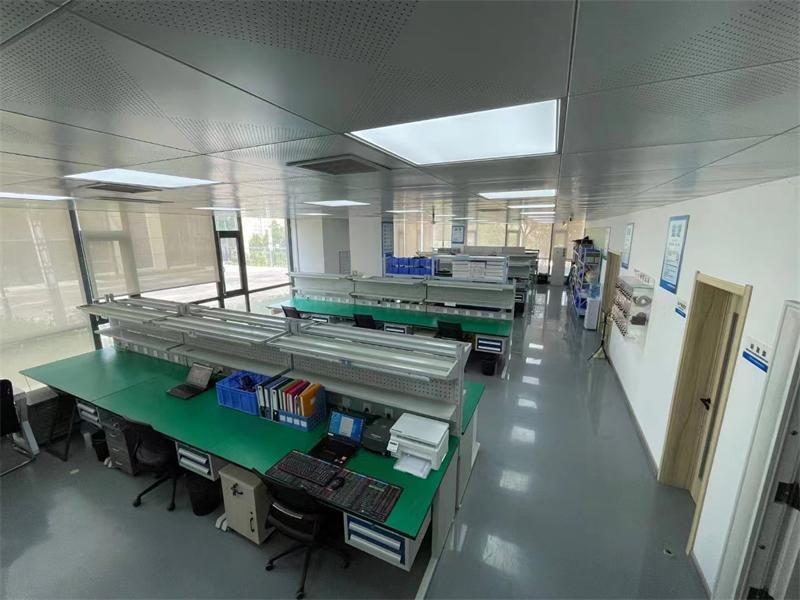
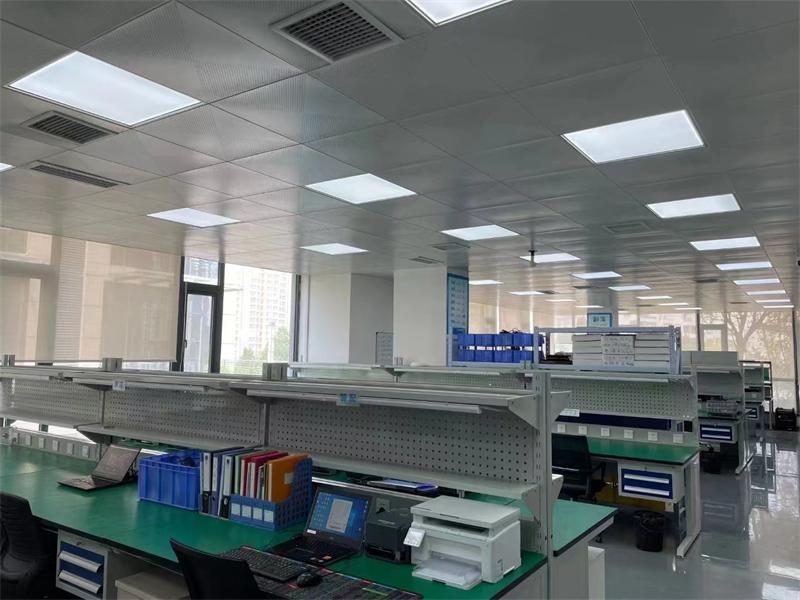
Factory Environment

Cinofiber will continue to be a leader in the optical communication industry, providing customers around the world with more stable, reliable, and high-quality products and services.

Certificate Of Honor

Related Products

S-S8180 Single-Frequency Anti-jamming &Anti-spoofing Antenna

S-S8180 Single-Frequency Anti-jamming &Anti-spoofing Antenna Confirmation FormSerialNumberprojectindex1Number of array elements8-lement2size180×180×25.5mm (±0.5mm)3weight≤890g4frequencyB1/E1/L15Anti-interference performance≥115dB (single jamming)≥105dB (three jamming )≥90dB (seven jamming )6Power supply voltageDC 12~36V7interface1x J30J-9ZK, 1xSMA8Power consumption≤17W9Structural installation accessories16 M3×8 screws and 4 mounting bracketsApplication Parameter Confirmation FormSerialcontentdefault valueCustomer confirmationN b1Structural installationStructural installation method1)Overhead installationThe antenna body shall be mounted to the platform using the provided mounting brackets. A minimum clearance of 10mm shall be maintained beneath theantenna to ensure adequate airflow and heat dissipation.2) Face to face installationThe antenna shall be mounted with itsbottom surface in direct and full contact with a metal surface to maximize thermal conduction and heat dissipation.Default: Overhead installation.If overhead installation cannot beachieved, please inform us in advance so that we can discuss and determine an alternative solution.□ Accept Default □ Customize: ______2connect1. Confirm whether a digital or radio frequency (RF) connection is used;2. Confirm the power supply method and power supply capacity;3. If using a digital connection, confirm the serial port output level;4.Confirm the output level of the anti- interference serial port5.Confirm the power supply connection method;6.Confirm the serial port connection method.1. Both connection methods aresupported, and the customer must confirm and select. Differentconnection methods correspond to different parameter configurations.2. Power supply method and capacity: The default power supply uses anXT30U-M male connector, and the power supply capacity must meet the device's peak power consumption of 26W.3. For digital connections, the default receiver serial port output level isLVTTL_3.3V. RS232 is available as options.4. The default anti-interference serial port output level is LVTTL_3.3V.RS232 is available as an option.5. A J30J connection cable isprovided by default, and the power supply uses an XT30U-M maleconnector. The customer needs to provide the corresponding female connector for mating.6. A J30J connection cable isprovided by default, and the serial port uses a DuPont male pin connector.□ Digital Connection□ RF ConnectionPower Supply: __________Power Supply Capacity: □ Meets SerialReceiver serial Port Level:□ Accepts Default□ Customizes: ___________Anti-interference serial Port Level:□ Accepts Default□ Customizes: ___________Power Connection: __________Serial Port Connection: __________3Output ProtocolIf using a digital connection, please confirm the following built-in receiver configurations:1. Output protocol: UBX or NMEA0183;2. Baud rate: 115200 or 230400 or other;3. Output frequency: 5Hz.d dThe default built-in receiverconfiguration for the single-frequency anti-jamming antenna is as follows:1. Output protocol: UBX protocol;2. Baud rate: 115200;3. Output frequency: 5Hz.□ Accept Default □ Customize: ______4Output Protocol(anti-jamming )Interference Monitoring Configuration: Output Protocol: ZSAJ ProtocolBaud Rate: 115200, 230400, or other (customizable upon request)Default configuration:Output Protocol: ZSAJ ProtocolBaud Rate: 115200□ Accept Default□ Customize: ______5End useThe product is limited to civilian unmanned platforms and high-precision positioning scenarios, including but not limited to drones, unmanned ships, autonomous vehicles, marine operations, and surveying and mapping.End use: ______6Application PlatformMulti-rotor drones, fixed-wing drones, unmanned surface vessels, autonomous vehicles, ground base stations, etc.Application platform: ______7Main applicationscenariosAerial surveying, inspection and patrol, logistics and distribution, precisionagriculture, offshore operations, communication relay, scientific research, etc.Application scenario: ______8End-usecountry/region:Country and region: ______Important Note: The above confirmation is the basis for product delivery. Once confirmed, any subsequent changes may incur additional costs or affect the deliverydate. If the default configuration cannot meet your application requirements, please provide detailed specifications in the "Customization" section. mplementation is only permitted after mutual communication and confirmation. Unless otherwise specified, electrical connection accessories (connectors, cables, etc.) will be based on the default configuration.Confirmation signature:Confirmation Date

S-S4100 Single-Frequency Anti-jamming &Anti-spoofing Antenna

S-S4100 Single-Frequency Anti-jamming &Anti-spoofing AntennaSerialNumberprojectindex1Number of array elements4 Array Elements2size100× 100×24.9mm (±0.5mm)3weight≤310g4frequencyB1/E1/L15Anti-interference performance≥115dB (single jamming)≥100dB (three jamming )6Power supply voltageDC 12~36V7interface1xJ30J-9ZK , 1xSMA8Power consumption≤10W9Structural installation accessories8 M3 ×8 screws and 4 hax studsApplication Parameter Confirmation FormSerialNumbcontentdefault valuer1Structural installationStructural installation method:1.Overhead installationUse hex studs to mount the antennabody to the platform, ensuring aminimum clearance of 10 mm beneath the antenna for proper airflow and heat dissipation.2. Fact to face installationMount the antenna with its bottomsurface in close contact with a metal mounting surface for effective heat conduction.Default: Overhead installation.If overhead installation cannot beachieved, please inform us in advance so that we can discuss and determine an alternative solution.2connect1.Confirm whether a digital or radio frequency (RF) connection is used;2.Confirm the power supply method and power supply capacity;3.If using a digital connection, confirm the serial port output level;4.Confirm the output level of the anti- interference serial port5.Confirm the power supply connection method;6.Confirm the serial port connection method.1. Both connection methods aresupported, and the customer must confirm and select. Differentconnection methods correspond to different parameter configurations.2. Power supply method and capacity: The default power supply uses anXT30U-M male connector, and the power supply capacity must meet the device's peak power consumption of 15W.3. For digital connections, the default receiver serial port output level isLVTTL_3.3V. S232 is available as options.4. The default anti-interference serial port output level is LVTTL_3.3V.RS232 is available as an option.5. A J30J connection cable isprovided by default, and the power supply uses an XT30U-M maleconnector. The customer needs to provide the corresponding female connector for mating.6. A J30J connection cable isprovided by default, and the serial port uses a DuPont male pin connector.3Output Protocol (Receiver)If using a digital connection, please confirm the following built-in receiver configurations:1. Output protocol: UBX or NMEA0183;2. Baud rate: 115200 or 230400 or other;3. Output frequency: 5Hz.d dThe default built-in receiver configuration is as follows:1. Output protocol: UBX protocol;2. Baud rate: 115200;3. Output frequency: 5Hz.4Output Protocol (anti-jamming )Interference Monitoring Configuration: Output Protocol: ZSAJ ProtocolBaud Rate: 115200, 230400, or other (customizable upon request)Default configuration:Output Protocol: ZSAJ ProtocolBaud Rate: 1152005End useThe product is limited to civilian unmanned platforms and high-precision positioning scenarios, including but not limited to drones, unmanned ships, autonomous vehicles, marine operations, and surveying and mapping.6Application PlatformMulti-rotor drones, fixed-wing drones, unmanned surface vessels, autonomous vehicles, ground base stations, etc.7Main application scenariosAerial surveying, inspection and patrol, logistics and distribution, precisionagriculture, offshore operations, communication relay, scientific research, etc.8End-usecountry/region:Important Note: The above confirmation is the basis for product delivery. Once confirmed, any subsequent changes date. If the default configuration cannot meet your application requirements, please provide detailed specifications only permitted after mutual communication and confirmation. Unless otherwise specified, electrical connection acc the default configuration.Confirmation signature:Confirmation DateConfirmation FormCustomer confirmation□ Accept Default □ Customize: ______□ Digital Connection□ RF ConnectionPower Supply: ___________Power Supply Capacity: □ Meets SerialReceiver serial Port Level:□ Accepts Default□ Customizes: ____________Anti-interference serial Port Level:□ Accepts Default□ Customizes: ____________Power Connection: ___________Serial Port Connection: ___________□ Accept Default□ Customize: ______□ Accept Default□ Customize: ______End use: ______Application platform: ______Application scenario: ______Country and region: ______s may incur additional costs or affect the deliverys in the "Customization" section. mplementation iscessories (connectors, cables, etc.) will be based on

JDJ-7 7-frequency probe and strike integrated square array

7-frequency integrated exploration and drilling system in a square formation + small spherical probe for detection/positioningFixed-type-Large spherical detectorFixed type-detects small spherical ballsVehicular-type detection of large spheresVehicular-type detection small sphereProduct Description:The 7-frequency integrated detection and countermeasure quad阵 device system consists of a detector and a four-directional directional jamming array, capable of detecting, identifying, and interfering with or countering drones. It enables drones to hover in place, make forced landings, or return, effectively safeguarding low-altitude airspace security and preventing drone entry into designated zones. Featuring outstanding detection and defense capabilities along with long-range operational performance, the system requires no personnel presence and can automatically conduct drone detection and defense operations. It can be deployed either fixedly or on vehicles according to specific scenario requirements, and may optionally include direction-finding functionality.characteristic :Omnidirectional emission: A four-directional jamming device provides 360° omnidirectional interference coverage.Network Management: Multiple systems can be centrally managed via a LAN/Internet.Unattended operation: The software backend allows setting automatic processing policies, enabling 24/7 unmanned operation.Product Parameter : Parameter Nameparameter valuesoverall unitOverall dimensions of the machine700 × 700 × 445 mm (excluding tripod and vehicle mount base)Total weight of the machine26kgDeployment MethodFixed-type, Vehicle-mounted typepower supply modemains power AC 220VTotal machine currentTargeted protection case: 120A (full-load operation)  working temperature-20~50℃Detection Section  Detection Frequency400MHz,600MHz,800MHz900MHz,1.1GHz,1.2GHz,1.4GHz,1.5GHz,2.4GHz,5.8GHzDetection Angle360° omnidirectionalDetection Precision±100Impact SectionHit Frequency800M、900M、1.2G、1.6G、2.4G、5.2G、5.8GImpact Power800M、900M、1.2G、1.6G、2.4G、5.2G、5.8G  AngulationHorizontal: 65°, Vertical: 30° (orientated)Functional ProtectionTemperature control protection, reflection protection

Handheld detectors and locators support custom scanning in the frequency range of 100MHz-6200MHz

PRODUCT SPECIFICATIONPerformance IndicatorsDetection Bands (Customizable)Supports custom scanning from 100MHz to 6200MHzDetection Distance1.5–2 km (urban environment) 2–3 km (open environment)Operational principleSpectrum identification, Drone ID identification, Remote ID identificationResponse time≤6sDetection recordMore than 10 itemsBoot time≤30sPhysical IndicatorsScreen size6 inchesDuration of flight3–4 hours, supports charging while usingLevels of protectionIP65Working temperature-25℃~+40℃Weight of equipment≤650gJD2-HDevice size≤ Dimensions: 178mm × 85mm × 35mm (excluding antenna and accessories). Antenna specifications: 2 units, each with a diameter of Φ20mm and length of 170mm.Passive handheld radio detector using spectrum, DJI ID & Remote ID. Covers 100MHz–6200MHz for real‑time drone signal analysis, identification, alerting & tracking. Features map UI, Bluetooth/4G for alerts/logs & database updates. No radiation, one‑hand operation, portable. Ideal for public security, drone cases & command coordination.Full-band coverage: 100MHz–6200MHz custom scan.Multi-model recognition: 800+ models (DJI, Autel, Hubsan, Xiaomi, etc.), supports FHSS & wall-penetrating drones.Whitelist/Blacklist: One‑click mark, whitelisted drones no alert.Drone & pilot positioning: Supports DJI mainstream & RID‑cooperative drones.Multi‑target tracking: ≥10 drones, detection, positioning & tracking.Device networking: Backend connection, alert reporting.Auto library building: Expandable spectrum library, manual/auto learning & adding.PTT intercom: Wireless group intercom for real‑time coordination.Product Features

Online Inquiry

We will contact you within one working day. Please pay attention to your email.

%{tishi_zhanwei}%