




dual Sixteen-Element Array Integrated Navigation Anti-Jamming Unit
JAJ2-16Pdual Sixteen-Element ArrayIntegrated Navigation Anti-Jamming UnitProduct Specification2026.04Table of Contents1 Overview2 Product Composition3 Product Specification3.1 Main Functions3.2 Main Technical Indicators3.3 External Interfaces3.4 Structural Design3.5 Reliability3.6 Environmental Adaptability3.7 Shock and Vibration4 Packaging5 Installation Precautions1. OverviewThis document specifies the product specification requirements for the JAJ2-16P Integrated Navigation Anti-Jamming Unit (hereinafter referred to as the "Anti-Jamming Unit").The anti-jamming unit is mainly composed of an array antenna, an anti-jamming processing module, a built-in receiver, andsupporting cables. It supports the reception, amplification, down-conversion, filtering, anti-jamming processing, and up-conversion output of signals at 16-channel BDS_B1, GPS L1 + L2, Galileo E1 frequency points or 16-channel BDS_B1, GPS L1 + L5, Galileo E1 frequency points.The built-in receiver supports PVT solution output, with a power supply range of DC9V ~36V, and has the function of resisting 1~ 15 incoming broadband, narrowband, pulse, frequency sweep and other suppression interferences.2. Product CompositionThe product consists of an anti-jamming unit has test cables, and random documents.The composition details are as follows:Table 2-1 Product Configuration (Single Set of Product)Serial NumberProduct Configuration itemnumberNote1Anti-Jamming Unit1 pcs300mm×300mm2Heat sink1 pcs3Connect Cable/Optional, not configured by default, customizable4Built-in navigation receiver/UM9605G1 frequencies/Optional, not supported by default, if chosen supported G1,the power consumption will Increase.6Screws1 set1 set contains 8pcs M2.5×2.4 screws Product Drawings of Anti-Jamming UnitFigure 2-1 Product Drawings of Anti-Jamming UnitFigure 2-2 Dimensions Drawing of Anti-Jamming Unit3. Product Specification3.1 Main Functions1). Supports the reception of signals at the BDS_B1, GPS L1 + L2, Galileo E1 frequency bands or the BDS_B1, GPS L1 + L5, Galileo E1 frequency bands.2). Supports to resist various jamming types such as broadband, narrowband, sweep, and pulse, as well as combinations ofthe above jamming, within the B1/L1/E1+L2 frequency bands or the B1/L1/E1+L5 frequency bands.3). Supports soft bypass and Anti-jamming mode output, which users can flexibly select and switch via the serial port.4).Built-in receiver, capable of outputting positioning solution results after Anti-jamming processing.3.2 Main Technical Indicators1) Frequency Point Anti-jamming Capability(1)Number of Channels: 16 channels, supporting BDS_B1, GPS L1+L2, Galileo E1 frequency bands or BDS_B1, GPS L1+L5, Galileo E1 frequency bands;(2)Anti-jamming types: Having the ability to resist various suppression interferences such as broadband, frequency sweeping and pulse in B1/L1/E1+L2 frequency band or B1/L1/E1+L5 frequency band, as well as the ability to resist the combination of the above interferences;(3)Number of Anti-multiple Interferences: 1 to 15 interference sources in different directions;(4)Anti-single Broadband Interference Capability: Interference-to-signal ratio ≥ 110dB@-130dBm;(5) Anti-seven Broadband Interferences Capability: Interference-to-signal ratio ≥ 100dB@-130dBm;(6)Anti-fifteen Broadband Interferences Capability: Interference-to-signal ratio ≥ 80dB@-130dBm;(7) Anti-jamming Spatial Range: Azimuth 0°~360°, Elevation -10°~90° .Note: The elevation angle is defined as the angle between the spatial vector of the anti-jamming unit and the horizontal plane, with the body coordinate system y-axis as the pitch axis, the counterclockwise direction is "+", and the clockwisedirection is "-".2) RF Output(1)RF Output Power: -55dBm~-70dBm;(2)RF Impedance: 50 ohms;(3)Output VSWR: ≤2.0.3) Built-in Receiver SpecificationsThe built-in receiver supports receiving and resolving signals at B1, L1, and E1+L2 or B1, L1, and E1+L5 frequency points, and outputs positioning results through a data interface:(1) Positioning Accuracy: Horizontal error ≤7m, vertical error ≤9m (95%, PDOP≤4);(2)Velocity Measurement Accuracy: ≤0.2m/s (95%).4) Antenna Port Burnout Resistance: ≥10W.5) Operating Voltage Range: DC9V~36V.6) Average Power Consumption: ≤70W.3.3 External InterfacesThe antenna is equipped with two external interfaces:1)1 pcs J30J power data interface, which is used for power supply and data commissioning. The power data interface is a J30J-25ZKP connector, with a total of 9PIN signal definitions as follows.Table 3-1 Power Data Interface Definition TableConnector PinNumberSignal DefinitionSignal DescriptionInstructions1+9V~+36VPower InputUnit Power Supply2+9V~+36VPower Input3GNDPower Ground4GNDPower Ground5RS422 RX-RS422 ReceiveData Transmission6RS422 RX+RS422 Receive7RS422 TX-RS422 Transmit8RS422 TX+RS422 Transmit9GNDPower GroundRS232 Data Transmission10RS232_RX1RS232 Receive11RS232_TX1RS232 Transmit12GNDPower GroundRS232 Data Transmission13RS232_RX2RS232 Receive14RS232_TX2RS232 Transmit15NCNC
Category:
Key Words:
- Product Detail
- parameter
-
JAJ2-16P
dual Sixteen-Element Array
Integrated Navigation Anti-Jamming Unit
Product Specification
1. Overview
This document specifies the product specification requirements for the JAJ2-16P Integrated Navigation Anti-Jamming Unit (hereinafter referred to as the "Anti-Jamming Unit").
The anti-jamming unit is mainly composed of an array antenna, an anti-jamming processing module, a built-in receiver, and
supporting cables. It supports the reception, amplification, down-conversion, filtering, anti-jamming processing, and up-conversion output of signals at 16-channel BDS_B1, GPS L1 + L2, Galileo E1 frequency points or 16-channel BDS_B1, GPS L1 + L5, Galileo E1 frequency points.
The built-in receiver supports PVT solution output, with a power supply range of DC9V ~36V, and has the function of resisting 1~ 15 incoming broadband, narrowband, pulse, frequency sweep and other suppression interferences.
2. Product Composition
The product consists of an anti-jamming unit has test cables, and random documents.
The composition details are as follows:
Table 2-1 Product Configuration (Single Set of Product)
Serial Number Product Configuration item number Note 1 Anti-Jamming Unit 1 pcs 300mm×300mm 2 Heat sink 1 pcs 3 Connect Cable / Optional, not configured by default, customizable 4 Built-in navigation receiver / UM960 5 G1 frequencies / Optional, not supported by default, if chosen supported G1,the power consumption will Increase. 6 Screws 1 set 1 set contains 8pcs M2.5×2.4 screws  Product Drawings of Anti-Jamming Unit
Figure 2-1 Product Drawings of Anti-Jamming Unit
Figure 2-2 Dimensions Drawing of Anti-Jamming Unit
3. Product Specification
3.1 Main Functions
1). Supports the reception of signals at the BDS_B1, GPS L1 + L2, Galileo E1 frequency bands or the BDS_B1, GPS L1 + L5, Galileo E1 frequency bands.
2). Supports to resist various jamming types such as broadband, narrowband, sweep, and pulse, as well as combinations ofthe above jamming, within the B1/L1/E1+L2 frequency bands or the B1/L1/E1+L5 frequency bands.
3). Supports soft bypass and Anti-jamming mode output, which users can flexibly select and switch via the serial port.
4).Built-in receiver, capable of outputting positioning solution results after Anti-jamming processing.
3.2 Main Technical Indicators
1) Frequency Point Anti-jamming Capability
(1)Number of Channels: 16 channels, supporting BDS_B1, GPS L1+L2, Galileo E1 frequency bands or BDS_B1, GPS L1+L5, Galileo E1 frequency bands;
(2)Anti-jamming types: Having the ability to resist various suppression interferences such as broadband, frequency sweeping and pulse in B1/L1/E1+L2 frequency band or B1/L1/E1+L5 frequency band, as well as the ability to resist the combination of the above interferences;
(3)Number of Anti-multiple Interferences: 1 to 15 interference sources in different directions;
(4)Anti-single Broadband Interference Capability: Interference-to-signal ratio ≥ 110dB@-130dBm;
(5) Anti-seven Broadband Interferences Capability: Interference-to-signal ratio ≥ 100dB@-130dBm;
(6)Anti-fifteen Broadband Interferences Capability: Interference-to-signal ratio ≥ 80dB@-130dBm;
(7) Anti-jamming Spatial Range: Azimuth 0°~360°, Elevation -10°~90° .
Note: The elevation angle is defined as the angle between the spatial vector of the anti-jamming unit and the horizontal plane, with the body coordinate system y-axis as the pitch axis, the counterclockwise direction is "+", and the clockwise
direction is "-".
2) RF Output
(1)RF Output Power: -55dBm~-70dBm;
(2)RF Impedance: 50 ohms;
(3)Output VSWR: ≤2.0.
3) Built-in Receiver Specifications
The built-in receiver supports receiving and resolving signals at B1, L1, and E1+L2 or B1, L1, and E1+L5 frequency points, and outputs positioning results through a data interface:
(1) Positioning Accuracy: Horizontal error ≤7m, vertical error ≤9m (95%, PDOP≤4);
(2)Velocity Measurement Accuracy: ≤0.2m/s (95%).
4) Antenna Port Burnout Resistance: ≥10W.
5) Operating Voltage Range: DC9V~36V.
6) Average Power Consumption: ≤70W.
3.3 External Interfaces
The antenna is equipped with two external interfaces:
1)1 pcs J30J power data interface, which is used for power supply and data commissioning. The power data interface is a J30J-25ZKP connector, with a total of 9PIN signal definitions as follows.
Table 3-1 Power Data Interface Definition Table
Connector Pin
Number
Signal Definition Signal Description Instructions 1 +9V~+36V Power Input Unit Power Supply 2 +9V~+36V Power Input 3 GND Power Ground 4 GND Power Ground 5 RS422 RX- RS422 Receive Data Transmission 6 RS422 RX+ RS422 Receive 7 RS422 TX- RS422 Transmit 8 RS422 TX+ RS422 Transmit 9 GND Power Ground RS232 Data Transmission 10 RS232_RX1 RS232 Receive 11 RS232_TX1 RS232 Transmit 12 GND Power Ground RS232 Data Transmission 13 RS232_RX2 RS232 Receive 14 RS232_TX2 RS232 Transmit 15 NC NC NC 16 +9V~+36V Power Input Unit Power Supply 17 +9V~+36V Power Input 18 GND Power Ground 19 GND Power Ground 20 GND Power Ground RS232 Data Transmission 21 RS232_RX2 RS232 Receive 22 RS232_TX2 RS232 Transmit 23 GND Power Ground RS232 Data Transmission 24 RS232_RX2 RS232 Receive 25 RS232_TX2 RS232 Transmit 2) 1 pcs SMA-K RF output interface, used for outputting B1/L1/E1+L2 frequency band or B1/L1/E1+L5 frequency band signals after antenna amplification and anti-interference processing. The definition of the RF signal output interface is shown in the following table:
Table 3-2 Definition Table of RF Signal Output Interface
Connector
Model
Signal Output Amplitude Signal Description Instructions SMA-K -55dBm~-70dBm Radio Frequency
Upconversion Output
Output B1/L1/E1 +L2 or B1/L1/E1 +L5 frequency
signal
3.4 Structural Design
1)Dimensions: Length × Width × Height: 300mm × 300mm × 27.6mm(±0.5mm,without heat sink size).
2)The main body of the product is in natural aluminum color with conductive oxidation treatment, and the radome is in silver-gray / white color.
3)Product Weight: ≤2100g(without heat sink weight).
4)Mounting Interface: As shown in Figure 2-2, there are 4 mounting screw holes on the side of the antenna, which are 8 M2.5 screw holes with a depth of 2.4mm.
3.5 Reliability
1) Mean Time Between Failures (MTBF): ≥2000h;
2) Continuous Operating Time: ≥24h.
3.6 Environmental Adaptability
1) Operating Temperature: -40℃~+70℃, 10%90%RH (no condensation);
2) Storage Environment: -45℃~+85℃, 10%~95%RH (no condensation);
3) Waterproof Rating: Not lower than IP65.
3.7 Shock and Vibration
Shock Test: Execute in accordance with ISO 19453-3:2018 "Environmental Test Methods for Civil Small and Light
Unmanned Aircraft Systems - Part 3: Shock Test".
Vibration Test: Execute in accordance with ISO 5309:2023 "Vibration Test Methods for Civil Small and Light Unmanned Aircraft Systems".
4. Packaging
The packaging box is made of paper, with an internal shockproof and drop-resistant buffer design.
5. Installation Precautions
(1) The bottom surface of the anti-interference antenna is a metal heat dissipation surface. When installing, ensure that the bottom surface has good heat dissipation conditions. It is recommended to closely fit the bottom surface with other metal planes during installation to achieve better heat dissipation effects, or install it overhead to ensure air flow at the bottom.
(2) The top surface of the anti-interference antenna is the GNSS signal receiving antenna plane. To ensure good GNSS signal
reception, when installing the anti-interference antenna on the carrier, it is necessary to ensure that its top surface directly faces the open sky and is unobstructed.
(3) When the anti-interference antenna is installed inside the body for use, the part of the body corresponding to the top surface of the antenna must be made of wave-transmitting materials and have a wave transmission rate of no less than 92% in the
L-band.
-
-
Anti interference Module
- Elements
- Bands
-
Applications
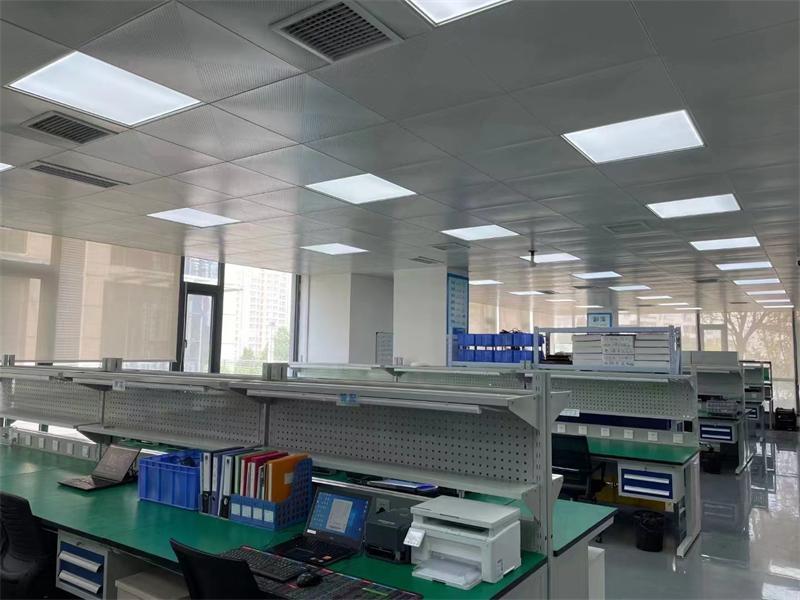
Factory Environment
Cinofiber will continue to be a leader in the optical communication industry, providing customers around the world with more stable, reliable, and high-quality products and services.



Questions And Answers
Certificate Of Honor



Related Products


CONTACT
Service Hotline
ADD: Collaborative Innovation Park, Hengli Town, Dongguan City, Guangdong, China

Swarm Technology
Ensure your low altitude security!


Powered by:CEglobal