

图片名称

Drone Detection, Countermeasure, And Anti-interference Solution

全部
  • 全部
  • 产品管理
  • 新闻资讯
  • 企业视频
  • 企业图册

Online Message

We will contact you within one working day. Please pay attention to your email.

%{tishi_zhanwei}%

Single frequency four channel nano anti-interference module

JAJ1-4 NANOMiniature Four-Element ArrayIntegrated Navigation Anti-Jamming UnitProduct Specification2026.04Table of Contents1 Overview2 Product Composition3 Product Specification3.1 Main Functions3.2 Main Technical Indicators3.3 External Interfaces3.4 Structural Design3.5 Reliability3.6 Environmental Adaptability3.7 Shock and Vibration4 Packaging5 Installation Precautions1. OverviewThis document specifies the product specification requirements for the JAJ1-4 Nano Integrated Navigation Anti-Jamming Unit (hereinafter referred to as the "AJU").The Anti-Jamming Unit is mainly composed of an array antenna, an anti-jamming processing module, a built-in receiver, andsupporting cables. It supports the reception, amplification, down-conversion, filtering, anti-jamming processing, and up-conversion output of 4-channel signals at BDS B1, GPS L1, and Galileo E1 frequency points.The built-in receiver supports PVT (Position, Velocity, Time) solution output. It has a power supply range of DC9V~36V and is capable of resisting 1 to 3 incoming interferences of various types such as broadband, narrowband, pulse, and frequency sweep suppression.2. Product CompositionThe product consists of an anti-jamming unit has test cables, and random documents.The composition details are as follows:Table 2-1 Product Configuration (Single Set of Product)Serial NumberProduct Configuration itemnumberNote1Anti-Jamming Unit1 pcs50mm×50mm2Connect Cable/Optional, not configured by default, customizable3Built-in navigation receiver1 pcsuBlox NEO-M9N4G1 frequencies/Optional, not supported by default, if chosen supported G1,the power consumption will Increase.5Screws1 set1 set contains 4 pcs M2.5×2.4 screwsProduct Drawings of Anti-Jamming UnitFigure 2-1 Product Drawings of Anti-Jamming UnitFigure 2-2 Dimensions Drawing of Anti-Jamming Unit3. Product Specification3.1 Main Functions1). Supports reception of BDS B1, GPS L1, and Galileo E1 frequency signals.2). Possesses the capability to resist various suppression interferences such as wideband, narrowband, sweep, and pulse, as well as combinations ofthe above interferences within the BDS B1, GPS L1, and Galileo E1 frequency bands.3). Supports soft bypass and anti-interference mode output, which users can flexibly select and switch via the serial port.4). Built-in receiver, capable of outputting positioning solution results after anti-interference processing.3.2 Main Technical Indicators1) Frequency Point Anti-jamming Capability(1)Number of Channels: 4 channels, supporting BDS B1, GPS L1, and Galileo E1 frequency bands;(2)Anti-jamming Types: Capable of resisting various suppression interferences such as broadband, frequency-sweeping, and pulse in B1/L1/E1 frequency bands, as well as the combination of the above interferences;(3)Number of Anti-multiple Interferences: 1 to 3 interference sources in different directions;(4)Anti-single Broadband Interference Capability: Interference-to-signal ratio ≥ 95dB@-130dBm;(5)Anti-three Broadband Interferences Capability: Interference-to-signal ratio ≥ 80dB@-130dBm;(6)Anti-jamming Spatial Range: Azimuth 0°~360°, Elevation -10°~90° .Note: The elevation angle is defined as the angle between the spatial vector of the anti-jamming unit and the horizontal plane, with the body coordinate system y-axis as the pitch axis, the counterclockwise direction is "+", and the clockwisedirection is "-".2) RF Output(1)RF Output Power: -55dBm~-70dBm;(2)RF Impedance: 50 ohms;(3)Output VSWR: ≤2.0.3) Built-in Receiver SpecificationsThe built-in receiver supports receiving and resolving signals at BDS B1, GPS L1, and Galileo E1 frequency points, and outputs positioning results through a data interface:(1)Positioning Accuracy: Horizontal error ≤7m, vertical error ≤9m (95%, PDOP≤4);(2)Velocity Measurement Accuracy: ≤0.2m/s (95%).4) Antenna Port Burnout Resistance: ≥10W.5) Operating Voltage Range: DC9V~36V.6) Average Power Consumption: ≤6W.3.3 External Interfaces1) 1 pcs J30J power data interface, which is used for power supply and data commissioning. The power data interface is a J30J-9ZK connector, with a total of 9PIN signal definitions as follows.Table 3-1 Power Data Interface Definition TableConnector PinNumberSignal DefinitionSignal DescriptionInstructions1+9V~+36VPower InputUnit Power Supply2+9V~+36VPower Input3GNDPower Ground4GNDPower Ground5RS422 RX-RS422 ReceiveData Transmission6RS422 RX+RS422 Receive7RS422 TX-RS422 Transmit8RS422 TX+RS422 Transmit9GNDPower Ground2) 1 pcs SMA-K RF output interface, which is used for outputting BDS B1, GPS L1, and Galileo E1 frequency signals after antenna amplification and anti-interference processing. The definition of the RF signal output interface is shown in thefollowing table:Table 3-2 Definition Table of RF Signal Output InterfaceConnectorModelSignal Output AmplitudeSignal DescriptionInstructionsSMA-K-55dBm~-70dBmRadio FrequencyUpconversion OutputOutput B1/L1/E1 frequency signal3.4 Structural Design1) Dimensions: Length × Width × Height:

Integration System for Anti Drone Usage

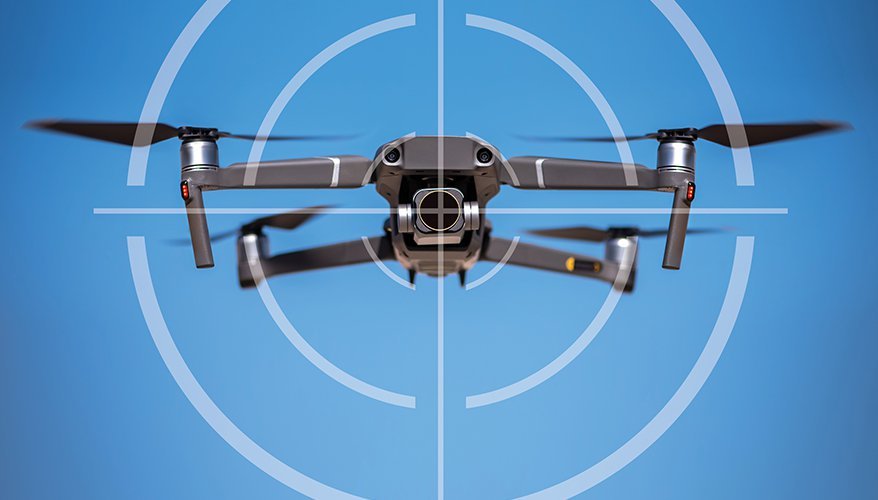
Each type of detection means can solve some situation drone defense usage. So integration is a must for important security usage. To achieve a comprehensive anti-drone defense system, it is essential to combine various detection technologies, such as radar, radio frequency (RF) detection, electro-optical sensors, and acoustic sensors. Each of these technologies offers unique advantages that can complement one another. For instance, radar systems excel in detecting larger drones at considerable distances, while RF detection can identify the control signals between the drone and its operator, providing insights into the drone's operational patterns. Electro-optical sensors, on the other hand, can provide high-resolution imagery to visually confirm the presence of a drone, allowing for accurate threat assessment. By integrating these technologies into a unified platform, operators can leverage real-time data from multiple sources, enhancing situational awareness and response capabilities. Moreover, advanced algorithms and machine learning techniques can be employed to analyze the collected data, enabling the system to differentiate between benign and hostile drones effectively. This integration not only improves detection accuracy but also reduces the likelihood of false alarms, which can lead to unnecessary resource allocation. Ultimately, a well-coordinated anti-drone system can provide a robust layer of security for sensitive areas such as airports, military installations, and public events, ensuring that potential threats are identified and neutralized swiftly and efficiently.

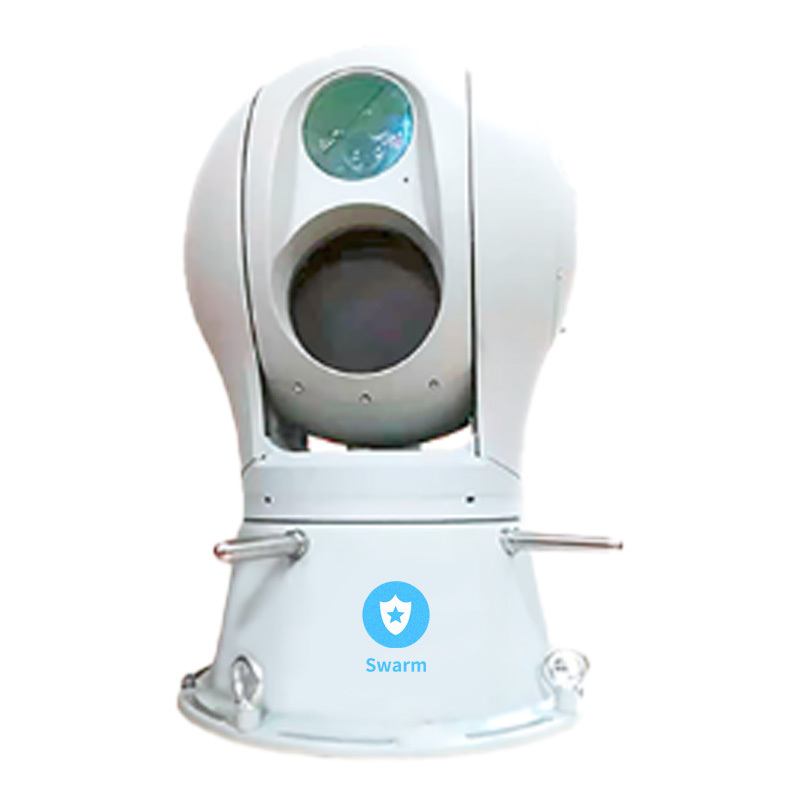
Multi-spectral target recognition tracking servo JP32

Product applicationsAirport security, border perimeter defense, low altitude proximity defense, low and small slow target tracking, etc. Product Features Visible light, uncooled thermal imaging ultra-long focal length, multi-spectral imaging under the same SOC encoding, transmission Dual-spectrum images are automatically zoom, focus integration, visible light images support optical fog Intelligent applications: edge computing, deep learning algorithms, support for target detection, target identification, target tracking Target classification and identification: more than 80 kinds of classification target identification such as people, vehicles, boats, animals, etc., similarity ratio judgment optional multi-sensor signal access, sensing alarm, voice intercom, environmental parameters, power management, etc. open architecture, can accept radar, AIS, ADS-B. Spectrum, TDOA and other multi-party system guidance Accurate azimuth, field of view return, can realize the accurate positioning of drones, cars, boats and other moving targets Independent IP or virtual dual IP, support national standard protocols, free access to all kinds of NVR, IPSAN, management platforms Triple defense structure The wind resistance level 15, adapt to the application of harsh environments 1-25KM large aircraft target detection, tracking, identification, 1-10KM aircraft landing gear target identification 1-6KM low-small and slow target detection, tracking, identification 1-20KM land and sea detection, tracking, identification, and other typical targets, such as people, cars, boats. Detection, tracking and identification of typical targets, such as people, vehicles, ships, etc. Parameter optical visual Image Resolution 1920*1080 @25fps/30fpsLens Focal Length F12.3-800mm, 65X Optical Continuous ZoomOptical Characteristics Color, Black and White, Optical FoggingImage Adjustment White Balance Exposure Compensation, Wide Dynamic, Gain Control, 3D Noise ReductionVideo Parameters Brightness, Contrast, Sharpness, SaturationFocus Mode Auto/ManualDaytime OperationPerformance Indicators 1.Reference Target: Civil AirlinerDetection Distance: ≥ 25KM; Tracking Distance: ≥ 20KM; Recognition Distance: ≥ 15KM2.Reference Target: Drone (Axis Distance 35cm)Detection Distance: ≥ 5KM; Tracking Distance: ≥ 4.5KM; Recognition distance: ≥3.5KM3. Reference target: humanDetection distance: ≥10KM; Tracking distance: ≥4KM; Recognition distance: ≥3KM4. Reference target: vehicleDetection distance: ≥15KM; Tracking distance: ≥6KM; Recognition distance: ≥4KM(Working conditions: ambient temperature: ≤20℃, visibility: ≥20Km, relative humidity: <40%) Thermalimage detector type uncooled (vanadium oxide detector, sensing band: 8-14um)image resolution 640 * 512; image encoding resolution: 1280 * 1024Lens focal length F30--150mm, optical 5X continuous zoomimage display modes Thermal black, thermal white, pseudo-colornight workperformance indicators 1. Reference target: civil aviation airlinersDetection distance: ≥ 18KM; Tracking distance: ≥12KM; Recognition distance: ≥8KM2. Reference target: UAVDetection distance: ≥2KM; Tracking distance: ≥1.5KM; Recognition distance: ≥1.2KM3. Reference target: humanDetection distance: ≥2KM; Tracking distance: ≥1KM; Recognition distance: ≥0.8KM4. Reference target: carDetection distance: ≥5KM; Tracking distance: ≥2KM; Recognition distance: ≥1.5KM(working conditions: ambient temperature: ≤20℃, visibility: ≥20Km, relative humidity: <40%) Servo Serving TurningTurntable Type Servo Direct Drive, PID FeedbackHorizontal Range, Speed 0°~360° Horizontal Keyed Speed: 0.05°~80°/sPitching Range, Speed -60°~+90° Vertical Keyed Speed: 0.05°~60°/sHorizontal Angle Correction Full Angle Electronic Corrective CompensationPreset Position Stopping Accuracy ±0.01°Turntable Functions 3D Control, Telephoto Speed Limit, Preset Position Cruise, auto scanning, watchman position Intelligent functionautomatic search full-screen motion target search, hot target tracking searchguidance mode can receive radar, spectrum, TDOA, ADS-B, AIS guidancetracking mode Specific target identification tracking, motion target tracking, guidance tracking, manual trackingtarget identification support for more than 80 kinds of classified targets such as drones, people, cars, boats, etc. classification identification, similarity judgment, etc.pre-warning linkage Alarm protocol uploading, capture Alarm protocol upload, capture, preset position linkageFigureimageandsystemsystem video compression format H.256 / H.264 / MJPEG (limited to picture capture)video protocol ONVIF, GB T-28181, RTSPnetwork protocols IPv4, TCP/IP, UDP, etc.network function system remote upgrade, virtual dual IP addressdiagnostic monitoring IP conflict detection, heartbeat detection, logging general specificationFan interface    Standard air-plug interface (including: DC48V power supply, 10M/100M adaptive network interface)Protection level IP66, optional triple-proofOperating temperature/humidity -40℃~+60℃, humid