


Advancements and Applications of DDS Jammer Technology in Modern Security Systems
2025-12-24
In recent years, the rapid development of wireless communication technologies has brought unprecedented convenience, but it has also introduced new security challenges. Among the tools designed to address these challenges, the DDS jammer has emerged as a highly effective device for controlling and managing signal interference. DDS jammer technology has attracted significant attention in both civilian and military applications due to its versatility, precision, and adaptability.
DDS jammer, short for Direct Digital Synthesis jammer, operates by generating precise interference signals that disrupt specific communication channels. Unlike traditional jamming devices, DDS jammers utilize digital signal processing to create highly accurate frequency patterns, allowing them to target particular signals without affecting surrounding communications. This precision makes DDS jammer technology ideal for environments where selective signal suppression is required, such as secure facilities, testing laboratories, and high-security events.
The primary advantage of a DDS jammer is its ability to cover a broad frequency range while maintaining signal integrity and stability. This feature allows users to effectively block unwanted transmissions from various sources, including mobile phones, Wi-Fi networks, and other wireless communication systems. Moreover, modern DDS jammer devices are equipped with adaptive capabilities, enabling real-time monitoring of the spectrum and automatic adjustment of jamming parameters. This ensures maximum effectiveness while minimizing unintended interference.
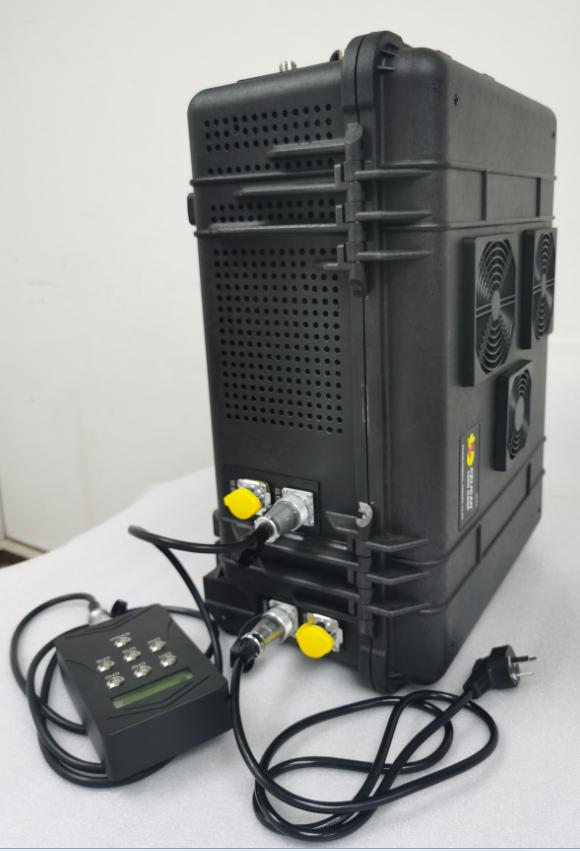
In addition to its technical advantages, the DDS jammer is becoming increasingly popular due to its practical applications in law enforcement and public safety. For example, during high-profile security events, DDS jammer devices can be deployed to prevent unauthorized communication that could compromise safety. Similarly, correctional facilities may use DDS jammer technology to block illicit mobile phone usage by inmates, reducing risks associated with contraband communication. These practical applications highlight the importance of DDS jammer technology in maintaining control over sensitive environments.
The development of DDS jammer technology has also been driven by advances in digital electronics and microcontroller systems. Modern DDS jammer units are compact, energy-efficient, and capable of precise frequency tuning, which enhances portability and usability in field operations. Engineers continue to explore ways to improve the power efficiency, durability, and multi-band capabilities of DDS jammers, ensuring they remain a reliable tool for signal management in complex communication landscapes.
Despite its benefits, the use of DDS jammer technology is subject to regulatory oversight in many countries. The intentional disruption of communication signals can interfere with critical services, so compliance with local laws and regulations is essential. Manufacturers of DDS jammer devices are increasingly designing systems with controlled output power, frequency-limited operation, and safety interlocks to mitigate legal and operational risks. Responsible deployment of DDS jammer technology is crucial to balance security objectives with regulatory compliance.
Looking forward, the role of DDS jammer technology in modern security systems is expected to expand further. With the growing complexity of wireless networks and the proliferation of connected devices, the need for precise, adaptable signal management tools has never been greater. Researchers are exploring integration of DDS jammer devices with AI-based spectrum analysis, enabling predictive interference and intelligent targeting of potential threats. This convergence of technologies promises to make DDS jammer systems more effective, efficient, and user-friendly.
In conclusion, DDS jammer technology represents a significant advancement in the field of signal control and security management. Its precision, adaptability, and broad application potential make it an essential tool for modern security systems, law enforcement, and specialized industrial environments. As research and development continue, the capabilities of DDS jammer devices are likely to grow, offering enhanced control over wireless communication environments while ensuring safety, reliability, and regulatory compliance.


Related News
CONTACT
Service Hotline
ADD: Collaborative Innovation Park, Hengli Town, Dongguan City, Guangdong, China

Swarm Technology
Ensure your low altitude security!


Powered by:CEglobal