


Active Radar Detector for UAV Surveillance Enhances Modern Airspace Security
2026-01-28
As unmanned aerial vehicles continue to expand across commercial, industrial, and security applications, the demand for reliable detection and monitoring technologies has grown rapidly. An active radar detector for UAV surveillance has emerged as a critical solution for addressing the increasing challenges associated with unauthorized drone activity, low-altitude airspace management, and sensitive area protection. By combining advanced radar sensing with intelligent signal processing, this technology plays a vital role in modern airspace security systems.
An active radar detector for UAV surveillance operates by actively emitting radar signals and analyzing the reflected echoes from airborne targets. Unlike passive detection methods that rely on external signals, active radar systems offer higher detection accuracy, longer range, and greater adaptability to complex environments. This capability allows the system to identify UAVs regardless of lighting conditions, weather changes, or electromagnetic interference, making it especially effective for round-the-clock surveillance.
One of the key advantages of an active radar detector for UAV surveillance is its ability to detect small, low-altitude, and slow-moving drones. Many commercial UAVs are designed with lightweight materials and compact structures that make them difficult to detect using traditional monitoring methods. Advanced radar algorithms enable precise target recognition, tracking, and classification, helping operators distinguish UAVs from birds, aircraft, or environmental clutter. This reduces false alarms and improves overall system reliability.
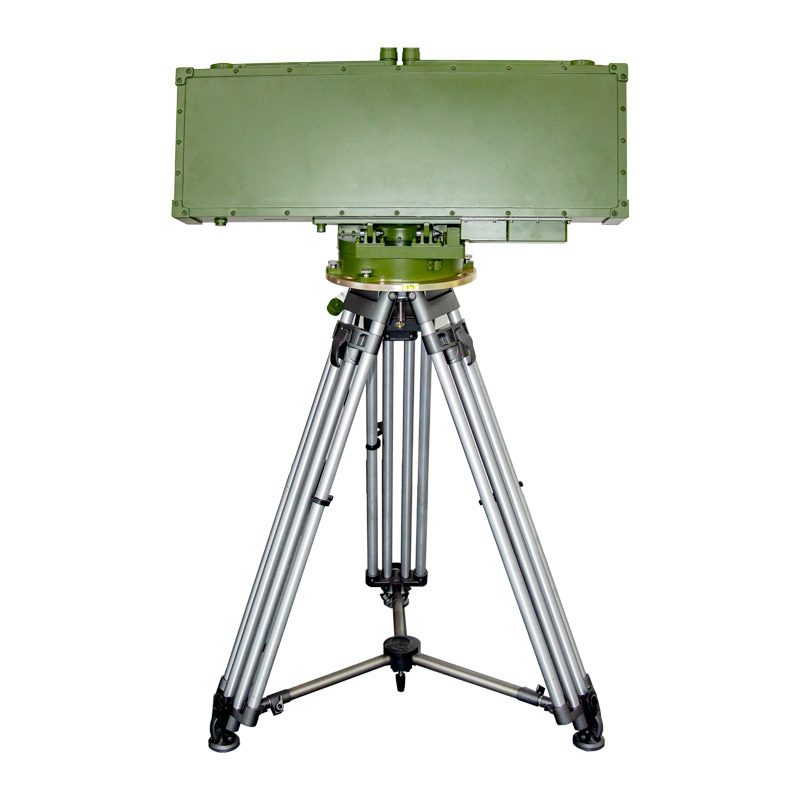
In security-sensitive scenarios such as airports, military bases, power plants, border areas, and large public events, an active radar detector for UAV surveillance provides early warning capabilities. By continuously scanning designated airspace, the system can quickly identify potential threats and provide real-time data to command and control centers. This allows security teams to respond promptly, whether through alert notifications, electronic countermeasures, or coordinated interception strategies.
Beyond security applications, active radar detector technology is also widely used in civil and commercial UAV management. As drone traffic increases in logistics, infrastructure inspection, and emergency response, airspace monitoring becomes essential to ensure safe and regulated operations. Radar-based UAV surveillance systems support air traffic coordination, collision avoidance, and compliance with aviation regulations, contributing to safer drone integration into shared airspace.
Another important feature of an active radar detector for UAV surveillance is its scalability and integration capability. Modern systems can be seamlessly integrated with optical sensors, RF detectors, and AI-based analytics platforms. This multi-sensor fusion approach enhances situational awareness and provides a more comprehensive understanding of aerial activity. Additionally, modular system design allows customization based on coverage range, detection sensitivity, and operational requirements.
As drone technology continues to evolve, so do the challenges associated with UAV monitoring. Stealthier designs, autonomous flight capabilities, and swarm operations demand more sophisticated detection solutions. The active radar detector for UAV surveillance continues to advance through innovations in signal processing, artificial intelligence, and hardware miniaturization. These developments ensure that surveillance systems remain effective, adaptable, and future-ready.
In conclusion, an active radar detector for UAV surveillance is an essential component of modern airspace management and security infrastructure. Its ability to provide accurate, real-time detection and tracking of unmanned aerial vehicles makes it indispensable for both defense and civilian applications. As global reliance on UAV technology grows, advanced radar-based surveillance solutions will play an increasingly important role in maintaining safety, security, and operational efficiency.


Related News
CONTACT
Service Hotline
ADD: Collaborative Innovation Park, Hengli Town, Dongguan City, Guangdong, China

Swarm Technology
Ensure your low altitude security!


Powered by:CEglobal